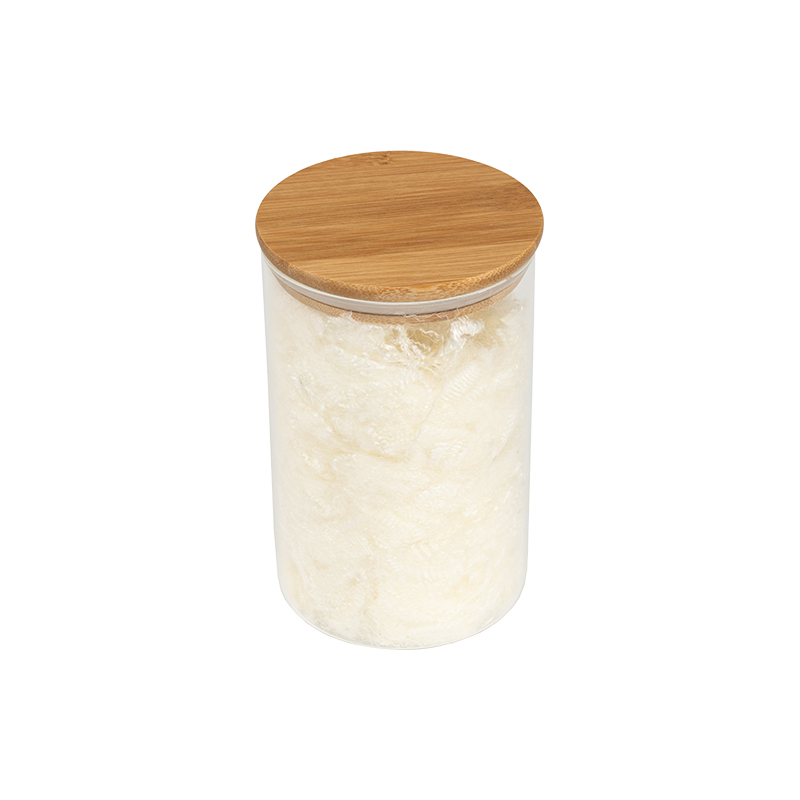
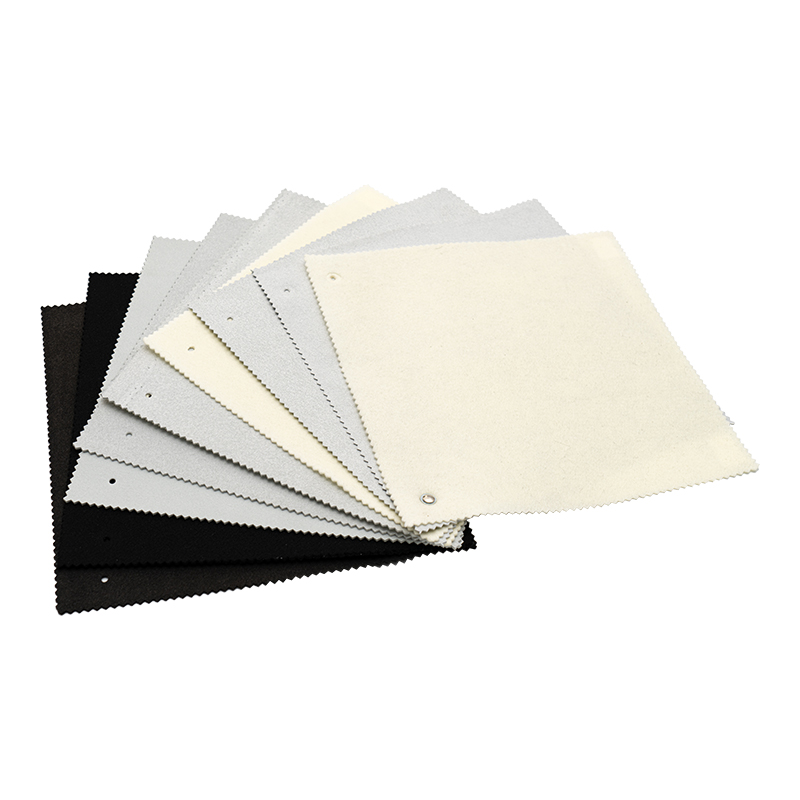
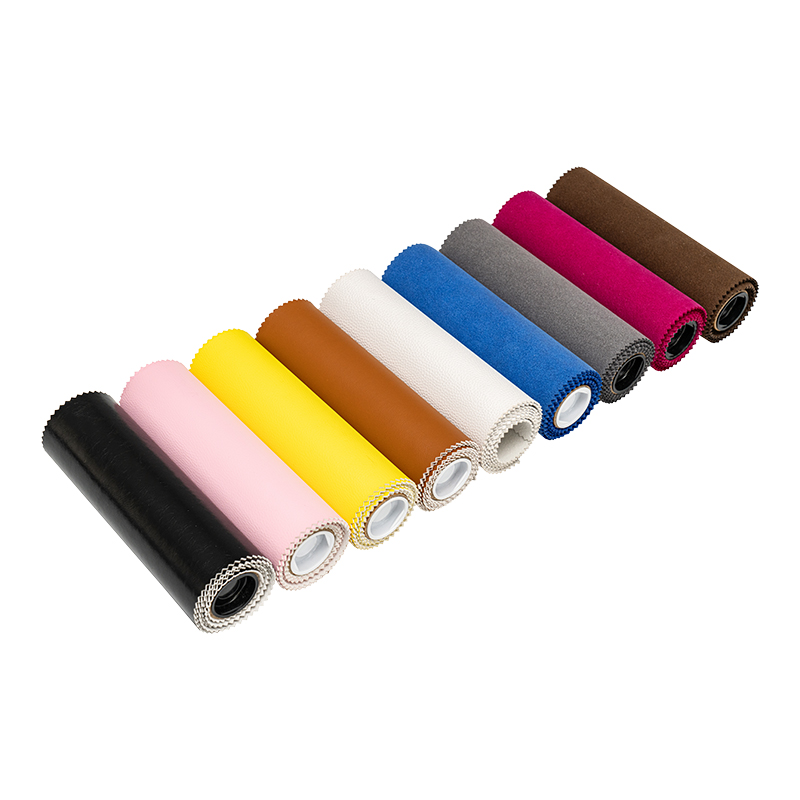
The “stiffness” problem in industrial filter media is a long-standing engineering bottleneck. Traditionally, filters designed for high-pressure industrial environments, such as cement plants or power station dust collectors, rely on high-denier fibers (coarse fibers) to maintain their shape. While these thick fibers provide the mechanical “backbone” required to resist collapsing under heavy airflow, they create a rigid, brittle matrix. This rigidity makes the media difficult to pleat without cracking and, more importantly, results in a porous structure with large, irregular gaps that allow sub-micron particles to leak through.
Water-soluble sea-island fiber offers a sophisticated “temporary carrier” strategy to resolve this. The fiber is engineered with two distinct components: the “Islands” (high-performance micro-filaments, usually PET or Nylon) and the “Sea” (a water-soluble modified polyester, or COPET). During the initial phases of textile manufacturing—such as carding, cross-lapping, and needle-punching—the fiber acts like a standard coarse fiber. This allows the non-woven mat to be processed on high-speed industrial looms without the tangling or static issues associated with traditional microfibers.
The transformation occurs during the “dissolution” or “weight reduction” phase. When the finished filter mat is treated with hot water, the COPET “sea” dissolves completely, releasing the thousands of “island” filaments. These filaments are often as fine as $0.05$ to $0.1$ denier—exponentially thinner than a human hair. By removing the rigid “sea” component, the internal stress of the fabric is relieved. What remains is a dense, soft, and highly flexible web of microfibers. This flexibility is the key to solving the stiffness problem: it allows for the creation of intricate, sharp pleats in a filter cartridge without damaging the fibers, thereby maximizing the effective filtration area within a compact housing.
To justify the switch to water-soluble sea-island technology, manufacturers must analyze the performance shift through quantifiable metrics. The primary advantage of this technology is the dramatic increase in the “Specific Surface Area” of the filter media, which directly impacts the dust-holding capacity and air permeability.
In traditional stiff media, the pore size is inconsistent, leading to “depth filtration” where particles become trapped deep inside the media. This is the primary cause of permanent clogging (blinding). Conversely, the ultrafine island fibers released after the water-soluble process create a highly uniform, microscopic mesh. This mesh facilitates “surface filtration,” where a thin “dust cake” forms on the surface of the media. This cake acts as its own filter, and because the underlying sea-island fibers are flexible, they can flex during pulse-jet cleaning to shed this cake efficiently.
A stiff filter often requires higher initial pressure to force air through its rigid gaps. As dust fills these gaps, the pressure drop spikes, leading to high energy consumption by the industrial fans. Sea-island media, despite having smaller pores, often exhibits a more stable pressure drop profile over time. The flexibility of the micro-filaments prevents the “pore-locking” seen in rigid fibers, extending the service life of the filter from months to years, which significantly offsets the higher initial material cost.
| Performance Metric | Traditional Coarse Polyester | Sea-Island Microfiber (Post-Reduction) |
|---|---|---|
| Fiber Diameter | $15\text{–}30$ Microns | $0.5\text{–}3.0$ Microns |
| Pore Distribution | Random / Large | Uniform / Ultrafine |
| Specific Surface Area | $\approx 0.2\text{–}0.4 \text{ m}^2\text{/g}$ | $\approx 2.0\text{–}5.0 \text{ m}^2\text{/g}$ |
| Flexibility / Handle | Rigid & Brittle | Supple & Pliable |
| Filtration Type | Depth Filtration | Surface Filtration |
| PM2.5 Capture Rate | $70\text{–}85%$ | $>99.9%$ |
| Pleat Density | Moderate | High (Allows more folds/unit) |
While the technical benefits are superior, implementing water-soluble sea-island fiber in a production line involves complex logistical and environmental considerations. It is not a “drop-in” replacement but a process-heavy upgrade that requires specific equipment and expertise.
The “Sea” component, usually COPET, requires precise water temperature ($80\text{°C}$ to $95\text{°C}$) and often a mild alkaline environment to dissolve efficiently. If the temperature is too low, the sea won’t dissolve, leaving the media stiff; if it is too high, it may damage the “island” filaments. Following dissolution, the media must be meticulously dried. Any residual moisture can lead to mold or a loss of structural integrity in the non-woven matrix. This adds an energy-intensive step to the manufacturing process that standard coarse-fiber media does not require.
The dissolved COPET becomes a component of the facility’s wastewater. Manufacturers must have robust wastewater treatment plants (WWTP) to handle the increased Chemical Oxygen Demand (COD) in the water. While COPET is generally considered biodegradable in industrial treatment systems, the sheer volume of dissolved polymer from a large-scale production run can be significant. This has led to the development of “Recyclable Sea” technologies, where the water-soluble component is precipitated out and reused, though this remains an expensive and emerging field.
There is such a thing as “too much flexibility.” If a filter media is entirely composed of sea-island microfibers, it might be too soft to withstand the high-pressure pulses of a cleaning system—it would simply “bag” or stretch. To solve this, engineers use sea-island fibers in a composite structure. Typically, a stiff, high-strength “carrier” layer (like a spunbond or a heavy scrim) provides the structural cage, while the water-soluble sea-island fiber is needle-punched into the surface to provide the filtration efficiency. This “skeleton and skin” approach ensures the filter remains easy to pleat and physically robust while reaping the benefits of microfiber flexibility.
What exactly is the “Sea” component in these fibers?
In water-soluble sea-island fibers, the “sea” is typically a specially modified polyester (COPET). It is engineered with hydrophilic groups that allow it to break down and dissolve in hot water, unlike standard polyester which is hydrophobic.
Does the removal of the “sea” component make the fabric lose weight?
Yes, typically the “sea” component accounts for $20%$ to $30%$ of the total fiber weight. When it is dissolved, the fabric becomes lighter. However, the density of the remaining “island” microfibers is so high that the filtration performance is significantly improved despite the lower total weight.
Is this technology suitable for high-temperature filtration?
It depends on the “island” material. If the islands are made of standard PET, they can handle up to $130\text{°C}\text{–}150\text{°C}$. For higher temperatures, manufacturers use sea-island fibers with PPS or P84 islands, which can withstand the harsh environments of coal-fired power plants.
How does this fiber help with “Pulse-Jet” cleaning?
Rigid filters often “blind” because dust gets wedged between stiff fibers. Because sea-island fibers are ultrafine and flexible, the dust stays on the surface. When a pulse of air hits, the microfibers flex slightly, causing the dust cake to crack and fall away much more easily than it would from a rigid surface.
Is sea-island fiber more expensive than standard microfiber?
Yes, the initial material cost is higher, and the additional water-processing step adds to the production cost. However, because it allows for much higher filtration efficiency and lower energy consumption (due to lower pressure drop), the Total Cost of Ownership (TCO) over the filter’s life is often lower.
In modern material science and synthetic leather manufacturing, microfiber bases are widely used as foundational layers that determine the performance, durability, and environmental impact of the final product. Among the most commonly used technologies are Water-Force Microfiber Base and Solvent-Bas...
READ MORE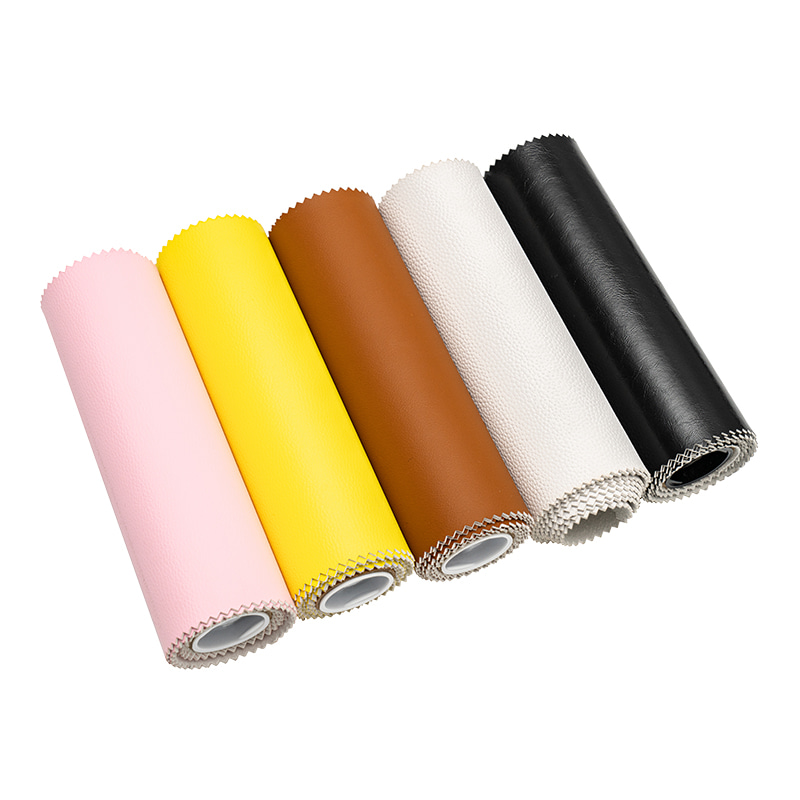
Introduction to Water-Soluble Sea-Island Fiber What is Water-Soluble Sea-Island Fiber? Water-soluble sea-islan...
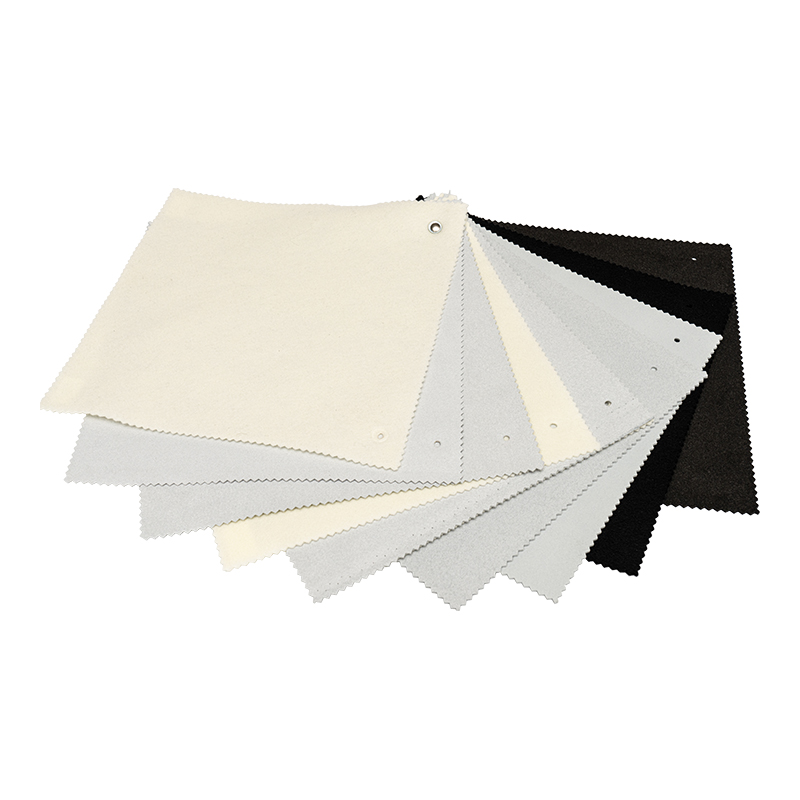
What is Water-Soluble Island-in-the-Sea Fiber? Water-Soluble Sea-Island Fiber is a breakthrough material in th...
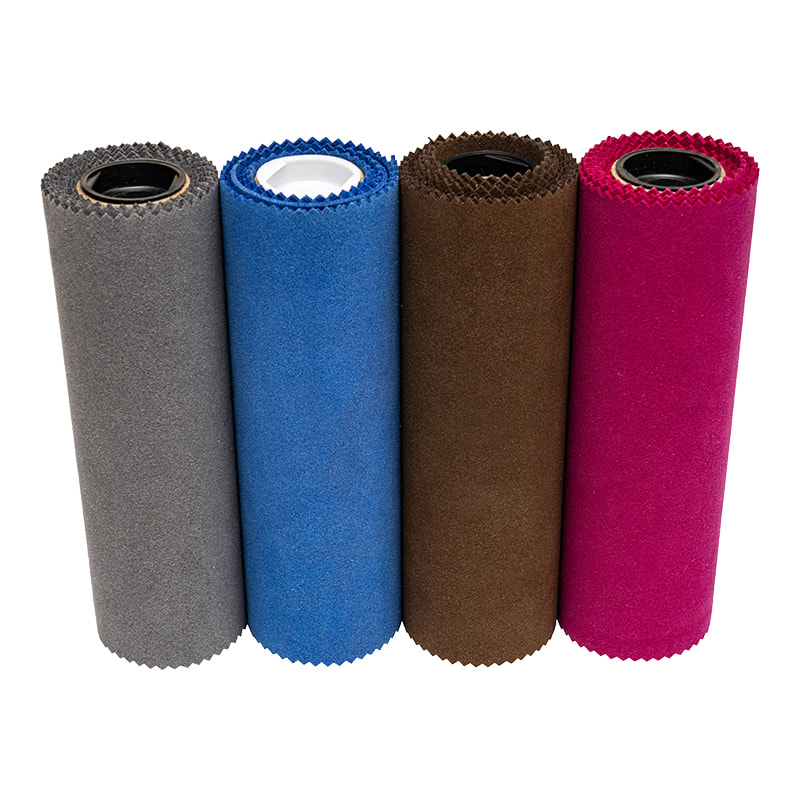
Introduction of Water-Force Microfiber Fabric What is Microfiber Fabric? Microfiber fabric is a type of textil...
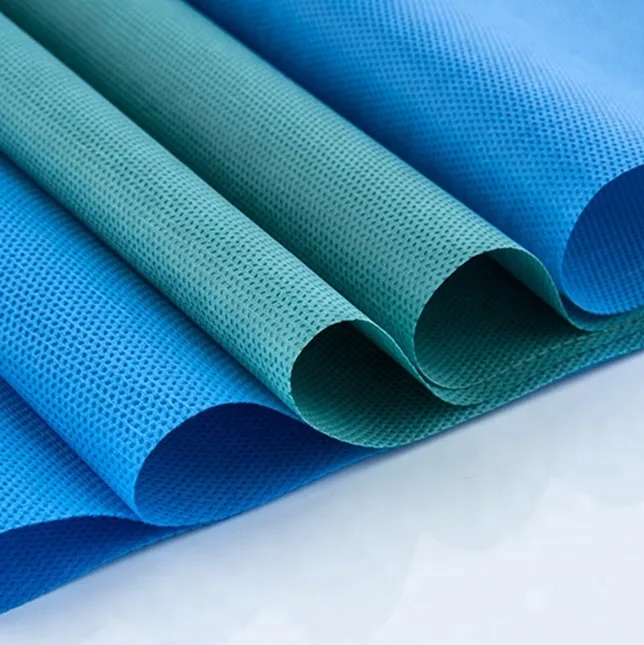
Introduction Water-soluble sea-island fiber nonwoven fabric is a groundbreaking innovation in the textile indu...
What is Water-Soluble Sea-Island Fiber? Definition and Basic Structure Water-soluble sea-island fiber is a spe...
LEMONTA Technology (ShangHai) Co., Ltd. All Rights Reserved. ALL RESERVED.
 Custom Bio-Based Water-Soluble Polyester Fiber Manufacturers
 英语
英语 中文简体
中文简体