"Fiber basics" is a phrase that splits in two directions depending on who is asking. In telecommunications it points to hair-thin strands of glass carrying pulses of light. In textiles it points to the filaments that are spun, bonded or needled into fabric, from a shirt lining to the suede-like surface of a microfiber leather. Both are fibers in the strict sense, yet they share almost nothing else: different materials, different physics, different vocabulary.
Our work sits firmly on the textile side of that divide, and nearly every conversation we have starts in the same place. What actually makes one fiber different from another, and why does it matter before a single meter of fabric has been produced? This guide answers that question in plain language.
A fiber is simply a structure that is very long relative to its width. By convention, the length-to-diameter ratio usually needs to exceed roughly 100:1 before something counts as a fiber rather than a particle or a film. That single geometric fact explains most of what fibers can do: flexibility, drape, tensile strength along the axis, and the enormous surface area that makes filtration and cleaning possible.
From there, fibers fall into three practical groups:
That last point is why synthetics dominate technical textiles. A natural fiber arrives with the properties it has; a synthetic fiber can be designed around the job it has to do.
When a mill evaluates a fiber, the discussion usually narrows to five measurable things.
Microfiber sits at the extreme end of the first number. The usual threshold is a linear density below one dtex, roughly a third of a fine cotton fiber. That is where the familiar microfiber properties begin: capillary action, dense surface coverage, and a hand that feels closer to suede than to ordinary polyester.
The table below is a simplified orientation for anyone new to the topic, not a specification sheet. Real values vary with polymer grade, spinning conditions and supplier.
| Fiber | Origin | Tenacity | Moisture regain | Common ground |
|---|---|---|---|---|
| Cotton | Plant seed hair | Moderate | High | Apparel, towelling |
| Wool | Animal fleece | Low to moderate | High | Suiting, knitwear |
| Viscose | Regenerated cellulose | Low when wet | High | Linings, nonwovens |
| Polyester | Synthetic polymer | High | Low | Apparel, nonwovens |
| Nylon | Synthetic polyamide | Very high | Moderate | Technical textiles, microfiber |
| PVA | Synthetic, water soluble | Moderate | Dissolves in water | Sacrificial matrix component |
Producing a sub-dtex fiber is not a matter of turning the extrusion dial down. Direct spinning can reach fine filaments, but pushing far below one dtex tends to bring filament breaks, uneven dyeing and handling problems that no downstream process can repair.
The industry's answer is a composite approach: spin two polymers together as a bicomponent fiber, then remove one of them so that what remains is ultrafine. Two geometries dominate. In the islands-in-the-sea structure, hundreds of fine filaments run lengthwise inside a single larger one. In the segmented or "pie" structure, wedges of the two polymers alternate around the cross-section. Either way, the matrix polymer has to be dissolved, washed or split away, and that step carries most of the cost and most of the environmental burden in microfiber production.
One route replaces the solvent bath with plain water. The "sea" is polyvinyl alcohol, a polymer that dissolves in hot water; the "islands" are nylon or polyester filaments bundled inside it. Once the fiber has been formed into a nonwoven or a fabric, fine high-pressure water jets separate the two components, and the islands are released as individual ultrafine filaments. Because nothing stronger than water is involved, the process avoids toluene, DMF, caustic soda and formaldehyde, and the dissolved PVA can be captured, concentrated and returned to the spinning line.
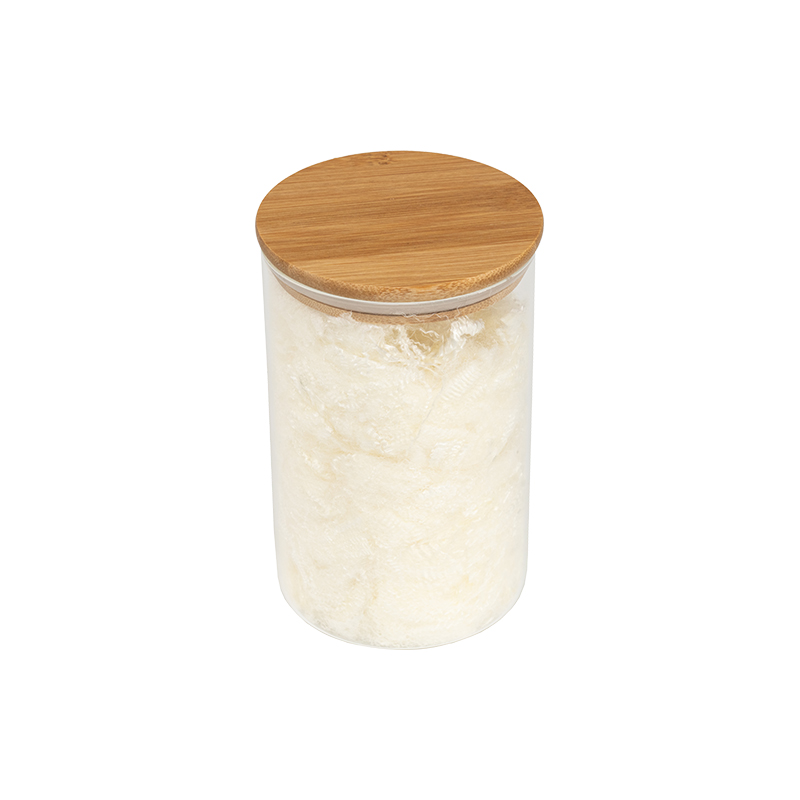
 Water-Soluble Island-in-Sea Nylon Fiber for Ultrafine TextilesUses a PVA sea dissolved in hot water to release nylon islands as ultrafine filaments, avoiding chemical reduction while allowing PVA recovery; 5.0D×51mm, 36 islands.View Product →
For a mill, the practical consequence is that the fiber arrives designed for splitting, and the splitting step becomes a controlled washing process instead of a chemistry problem. We wrote a longer explainer on what water-soluble island-in-the-sea fiber is if you would like the process detail. The choice between nylon and polyester islands then comes down to the hand you want in the finished material: nylon brings toughness and a softer touch, polyester brings dimensional stability and lower cost.
The raw fiber is only the first of three stages. Next comes a nonwoven fabric, where the filaments are laid into a web and bonded so the structure holds together before splitting. Basis weight, needle density and bonding method at this stage decide how evenly the water jets can open the fiber later on, and uneven opening is the most common cause of streaks in the final microfiber surface.
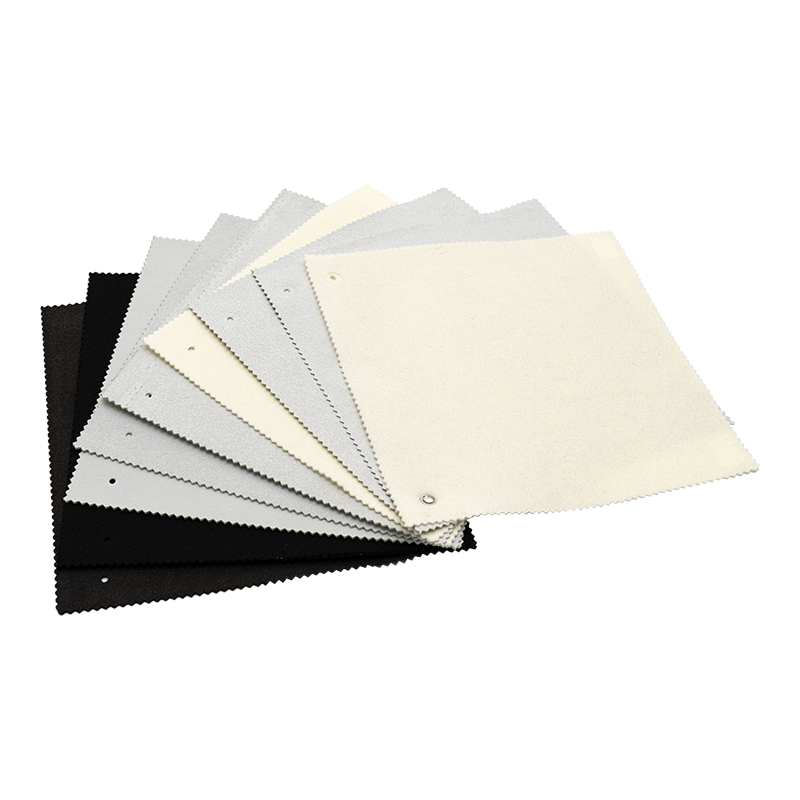
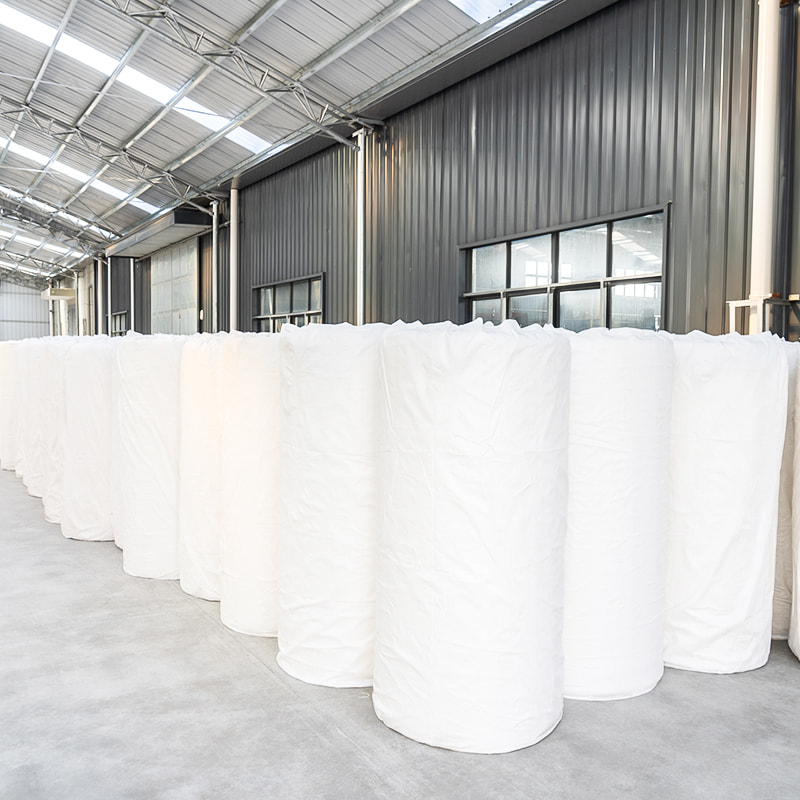 Water-Soluble Sea-Island Polyester Fiber Nonwoven FabricA PVA-sea nonwoven that dissolves in hot water to leave ultrafine polyester islands, offered at 280–800 g/m² and 1.6–1.75 m width for microfiber substrates.View Product →
The third stage is the water-based microfiber base, a sheet material fine enough to be impregnated with resin and finished into leather-like composites. This is where the fiber basics you have just read stop being theory. Linear density sets the density of the surface texture, cross-section sets how the material takes dye, and moisture behavior sets how it responds to the coating line.
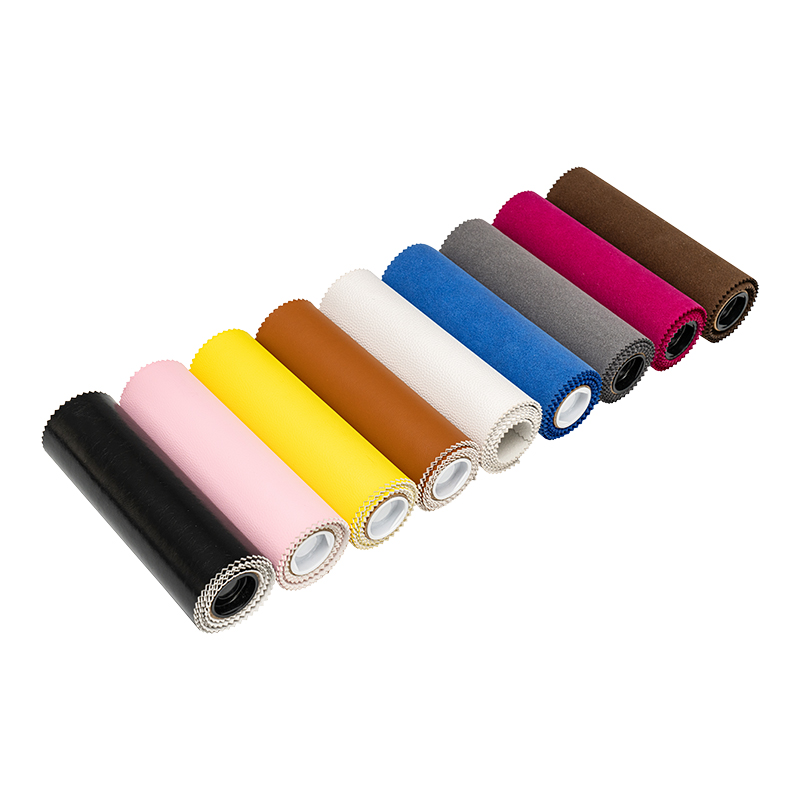
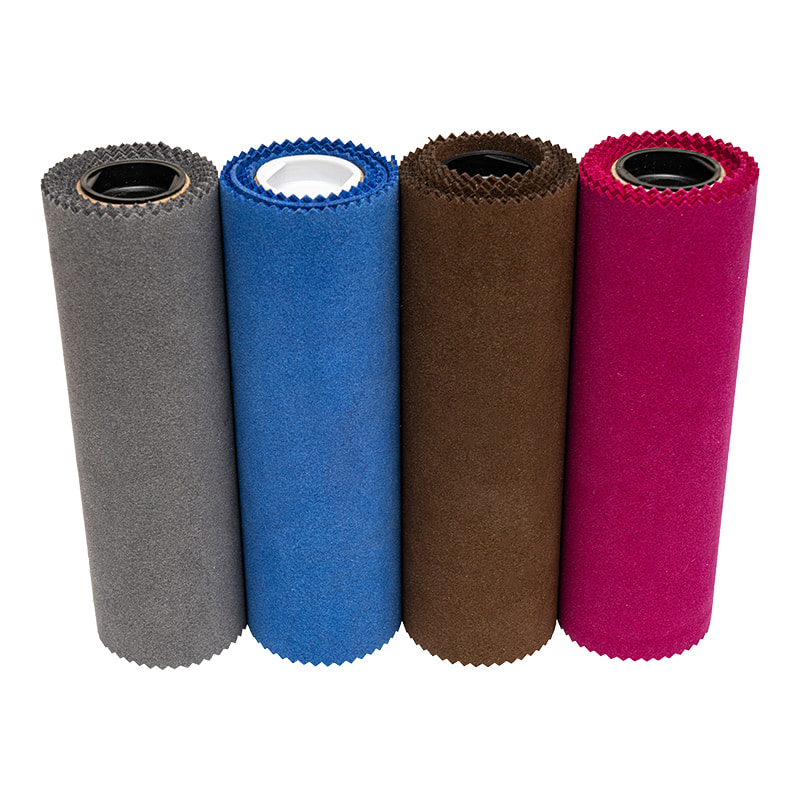 Water-Force Microfiber Fabric for Footwear, Furniture and AutomotiveA water-reduced sea-island nonwoven impregnated with water-force polyurethane, combining 0.3–0.5 denier fineness with breathability for footwear, upholstery and automotive interiors.View Product →
Whether you are buying or developing, these questions save time later:
Fiber basics really comes down to a handful of measurable properties and one design question: what is this fiber supposed to do that a cheaper one cannot? Once you can answer that, specifications stop being a list of numbers and start being a set of trade-offs you control deliberately. It also explains why we spend so much of our time on the unglamorous part of the chain, the fiber itself, rather than on the finished surface everyone notices.
If you are working through a material decision and want a second opinion on linear density, splitting behavior or the choice between nylon and polyester islands, talk to our team. We are happy to share what we have learned from more than a decade of getting water-based fiber splitting to run reliably at production scale.
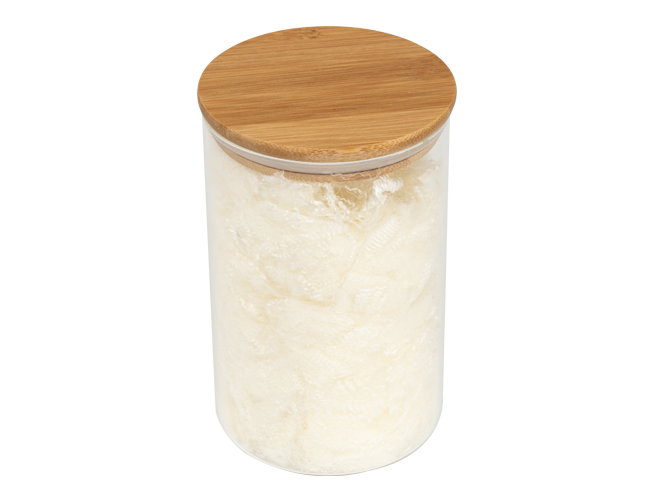
If you have ever opened a yarn specification sheet, a purchase order, or a supplier's technical data file and found the letters FDY sitting next to a denier number, you are not alone in pausing for a second. The abbreviation turns up constantly in the filament yarn trade, yet it is rarely spelled o...
READ MORE
Introduction to Water-Soluble Sea-Island Fiber What is Water-Soluble Sea-Island Fiber? Water-soluble sea-islan...
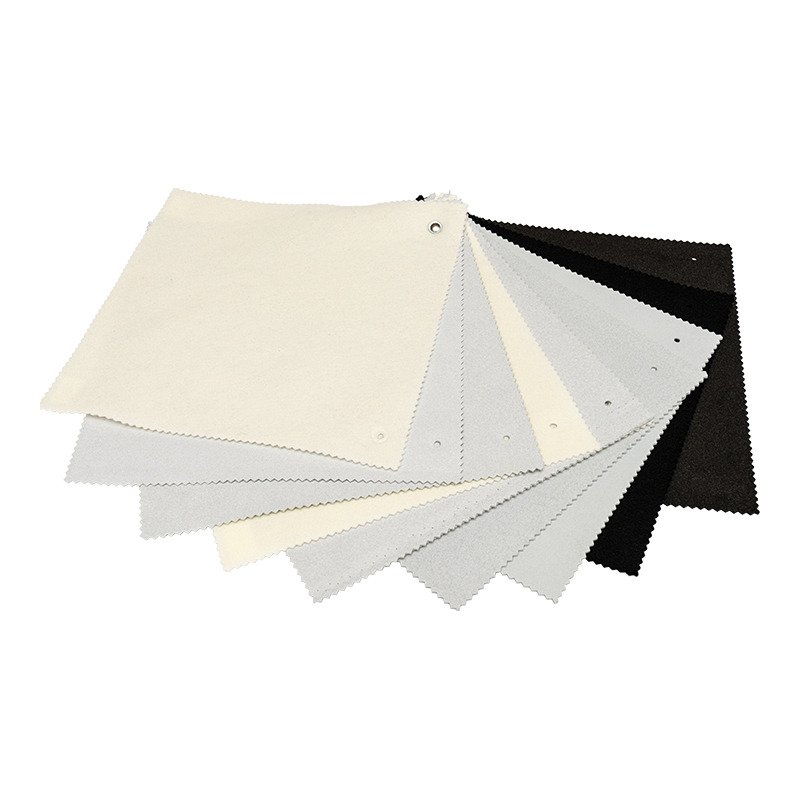
What is Water-Soluble Island-in-the-Sea Fiber? Water-Soluble Sea-Island Fiber is a breakthrough material in th...

Introduction of Water-Force Microfiber Fabric What is Microfiber Fabric? Microfiber fabric is a type of textil...
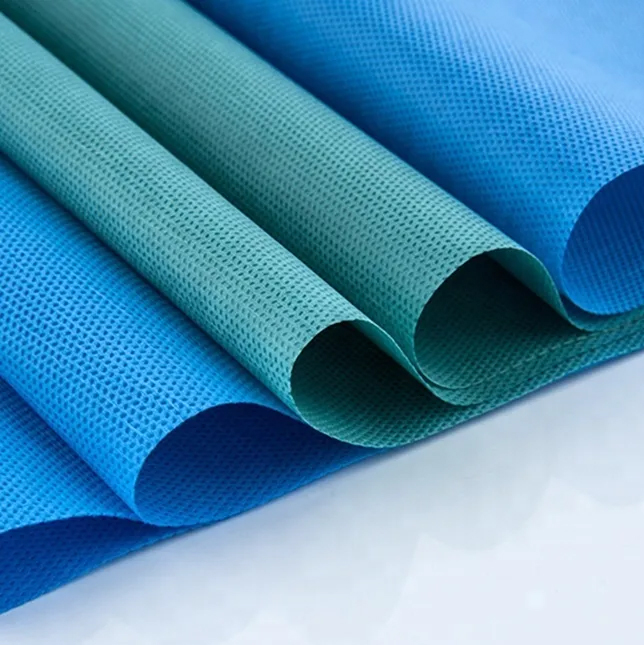
Introduction Water-soluble sea-island fiber nonwoven fabric is a groundbreaking innovation in the textile indu...
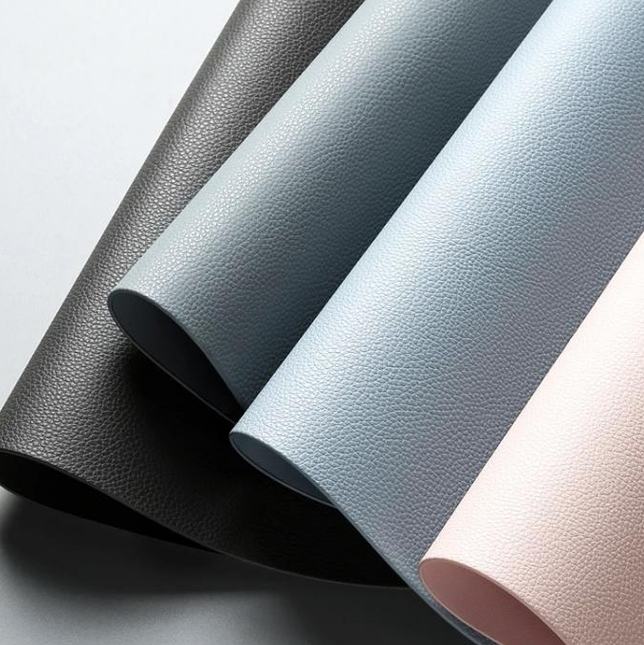
What is Water-Soluble Sea-Island Fiber? Definition and Basic Structure Water-soluble sea-island fiber is a spe...
LEMONTA Technology (ShangHai) Co., Ltd. All Rights Reserved. ALL RESERVED.
 Custom Bio-Based Water-Soluble Polyester Fiber Manufacturers
 英语
 中文简体