英语
 中文简体
Needle-punched structures
Mechanical bonding entangles the bicomponent filaments into a three-dimensional web that holds together through the water-powered splitting stage and can be handled as a roll.


Ask ten people what "green poly fiber" means and you will get three different answers. A hobbyist will picture a bag of soft, green-dyed polyester fiber used to build miniature hedges and tree canopies for model scenery. A textile buyer will picture recycled or bio-based polyester. A materials engineer will picture something else entirely: an ultrafine polyester fiber that was opened without the solvents that normally come with microfiber manufacturing.
All three are describing the same base polymer, polyethylene terephthalate, usually shortened to PET, but they are judging it against completely different standards. One cares about color, one cares about feedstock, and one cares about what happens on the factory floor between the spinning machine and the finished roll of material.
This guide is written from the third perspective. We have spent more than a decade developing water-soluble sea-island fibers and water-powered microfiber materials, and in that time we have watched the word "green" become the most overworked adjective in the fiber business. So here is a practical, slightly unsentimental look at what green poly fiber actually is, how it is made, where the green claims usually break down, and why the way you remove the "sea" from a bicomponent fiber matters more than almost anything printed on the label.
The phrase gets used in two very different ways, and mixing them up is the fastest route to buying the wrong material.
In crafts, model making, and display work, green poly fiber simply means polyester fiber that has been dyed or pigmented green. It is a staple fiber, sold by weight, used to build foliage, fill cushions, or add texture to a scene. Its environmental story is whatever the underlying fiber's story happens to be; the color itself adds nothing and takes nothing away.
In textiles and advanced materials, green poly fiber means polyester that was produced or processed with a lower environmental burden: recycled PET feedstock, renewable electricity in spinning, reduced water and chemical use downstream, or a manufacturing route that avoids hazardous solvents altogether. This is where the genuinely interesting engineering lives.
A fiber can be one, both, or neither. Green-dyed fiber made from virgin polymer on a solvent-heavy line is not a green material. A naturally white recycled fiber opened in a hot caustic bath is only half a green story. If you are specifying material for a product, ask which definition your supplier is using before you start comparing prices, because the two definitions rarely point at the same fiber.
There is also a quiet overlap worth knowing about. Even the simple craft fiber in a hobby bag was once molten polymer pushed through a spinneret, drawn, crimped, and cut. The upstream decisions that make industrial polyester more or less sustainable are the same decisions that shape the cheap stuff. Understanding the process helps you read both.
Polyester is a condensation polymer built from purified terephthalic acid and monoethylene glycol. The polymer is melted, extruded through spinnerets, drawn to align the molecular chains, and then either wound as continuous filament or cut into staple. The process is fast, cheap, and remarkably tunable, which is why polyester now accounts for the largest single share of global fiber production.
Conventional PET comes from fossil feedstock. Recycled PET comes from bottle flakes or textile waste. Bio-based routes use renewable carbon. This stage sets the fiber's baseline footprint.
Melting, extrusion, drawing, and heat setting consume most of the energy. Fine filaments and bicomponent structures are far harder to spin consistently than ordinary staple.
Dyeing, finishing, coating, and, for microfibers, the opening step. This is where a solvent-based process can quietly undo an excellent upstream story.
Notice that only one of those three stages normally gets advertised. "Recycled" speaks to stage one. "Low-carbon spinning" speaks to stage two. Almost nobody talks about stage three, even though it is often the dirtiest part of making a fiber fine enough to deserve the name microfiber.
To make a fiber genuinely ultrafine, below roughly 0.3 dtex, fine enough to produce that dense suede-like hand feel, you cannot simply extrude a thinner filament. The polymer will not survive the draw ratio and the spinnerets would clog. Instead, the industry uses bicomponent spinning: two polymers are extruded together in a controlled geometry, and one of them is removed afterwards, leaving the other behind as bundles of extremely fine filaments.
The most common geometry is islands-in-the-sea. Hundreds of fine islands of polyester or nylon sit inside a sea of a second polymer. Once the fiber or the fabric web is formed, the sea is dissolved away and the islands are released as microfiber.
The trouble is how the sea gets dissolved. The conventional answers are organic solvents such as toluene or DMF, or a hot caustic soda bath. Both work, and both arrive with a bill attached: solvent recovery systems, volatile organic compound emissions, hazardous material handling, and wastewater with a chemical oxygen demand that can climb into the thousands of milligrams per litre. The sea polymer itself is destroyed in the process, which means a meaningful fraction of the material you paid for literally goes down the drain.
That is the part of the microfiber story that a "recycled content" label never mentions. You can start with the cleanest feedstock in the world and still finish with a wastewater problem if the opening step is solvent-based.
There is a cleaner way to build the same structure, and it begins with choosing a different sea.
Water-soluble polyvinyl alcohol is a practical alternative to solvent-dissolved polymers. It can be co-spun with polyester or nylon into a stable islands-in-the-sea filament, survives drawing and nonwoven forming, and then dissolves in plain water when the moment comes. No toluene. No DMF. No strong alkali. No formaldehyde. No fluorinated compounds. Just water, pressure, and a carefully controlled fiber structure.
The island component can be either polyester or nylon, and that choice changes the hand feel, dyeability, and durability of the finished microfiber. Polyester islands deliver strength, UV stability, and dimensional consistency, which is why water-soluble polyester sea-island fiber has become the workhorse of the range.
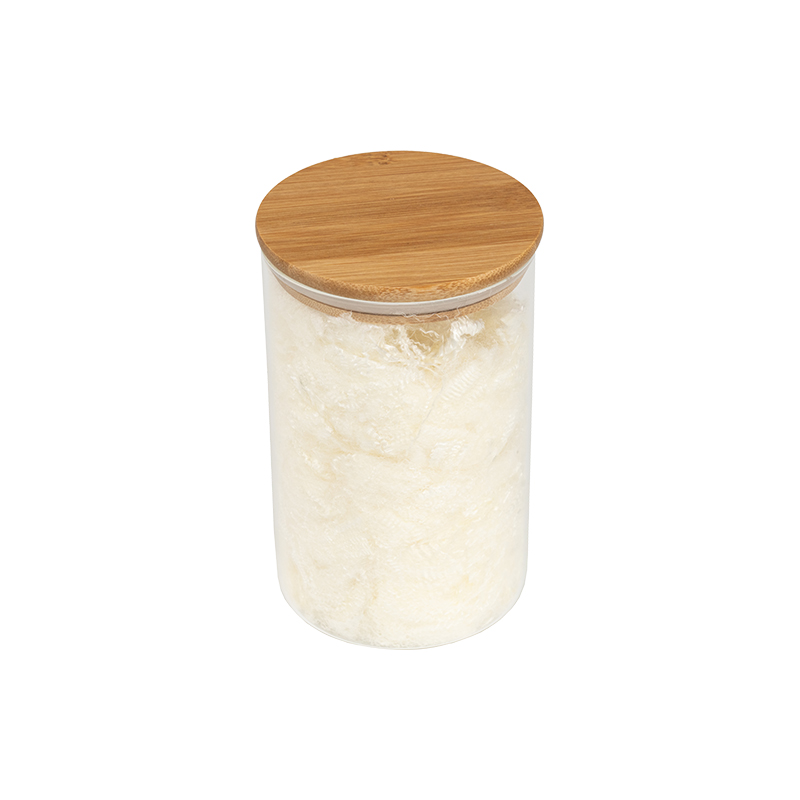
 Water-Soluble Sea-Island Polyester MicrofiberFor evaluating island-to-sea control and PVA sea quality, this bicomponent fiber specifies 36 islands, 30% sea phase, and hot-water opening.View Product →
Two details decide whether this approach holds up at industrial scale. The first is balance spinning, the ability to hold an exact island-to-sea ratio and a consistent island count along the entire filament. If that ratio drifts, the fiber splits unevenly and you end up with a mixture of genuinely ultrafine filaments and merely fine ones, which shows up later as blotchy dyeing and inconsistent hand feel. The second is the molecular weight of the PVA sea. Too low and the filament will not survive spinning; too high and it refuses to dissolve cleanly during splitting. Getting both right is the difference between a laboratory curiosity and a production line that runs every day.
Step by step, the water-powered route looks like this.
Step six is the one that turns an elegant idea into a defensible process. Our own concentration and drying technology is designed to recover up to 98% of the PVA, which keeps an expensive raw material inside the loop and keeps organic load out of the wastewater. The working targets we hold ourselves to are a reduction in water consumption per unit of around 83%, a carbon footprint reduction of roughly 65%, and a wastewater COD near 50 mg/L, a fraction of what a solvent or caustic line generates.
Those figures are our own process targets rather than third-party audited results, and any buyer should treat them the way they would treat any supplier's numbers: as a starting point for verification, not a conclusion. What matters more than the headline percentage is whether the supplier can explain the mechanism behind it. Here the mechanism is simple and checkable. If the sea dissolves in water and the water is recovered, there is no solvent to vent and no caustic to neutralise.
If you would like to go deeper into the environmental side of this chemistry, we have written a longer piece on the environmental benefits of water-soluble sea-island fiber that walks through the same mechanism from a wastewater and emissions angle.
Putting the two approaches side by side makes the trade-offs much clearer. The table below compares a conventional solvent or caustic route with a water-powered route on the points that usually decide a specification.
| Aspect | Solvent or caustic route | Water-powered route |
|---|---|---|
| Sea component removal | Organic solvent or hot alkali | High-pressure water |
| Solvent use | Yes, typically toluene or DMF | None |
| Alkali and acid | Caustic soda with neutralisation | None required |
| Wastewater COD | Often thousands of mg/L | Around 50 mg/L |
| Fate of the sea polymer | Dissolved and discharged as waste | Recovered as PVA, up to 98% |
| Air emissions | VOC and solvent vapour risk | Minimal, VOC below national limits |
| Worker exposure | Solvent handling and heavy PPE | Water-based, low hazard |
| Water consumption | High, plus solvent recovery load | Reduced by roughly 83% |
| Achievable fiber fineness | Very fine | Very fine, set by island count |
| Recyclability of the sea | Effectively lost | Returned to the spinning loop |
One honest caveat belongs here. Water-powered splitting is not automatically cheaper. It replaces solvent recovery equipment with water handling and PVA recovery equipment, and it demands tighter control over the spinning stage. The savings show up over time, in lower raw material losses, lower waste treatment costs, and far simpler compliance. If your only metric is the price per kilogram of fiber on the day of purchase, the conventional route can still look competitive. If your metric is total cost and regulatory risk over five years, the picture changes quickly.
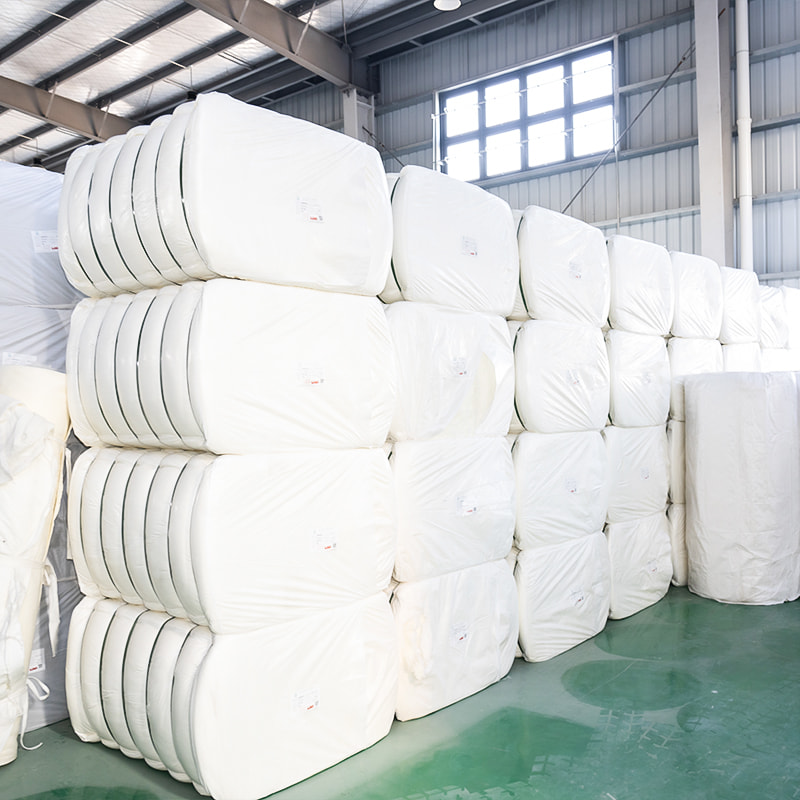
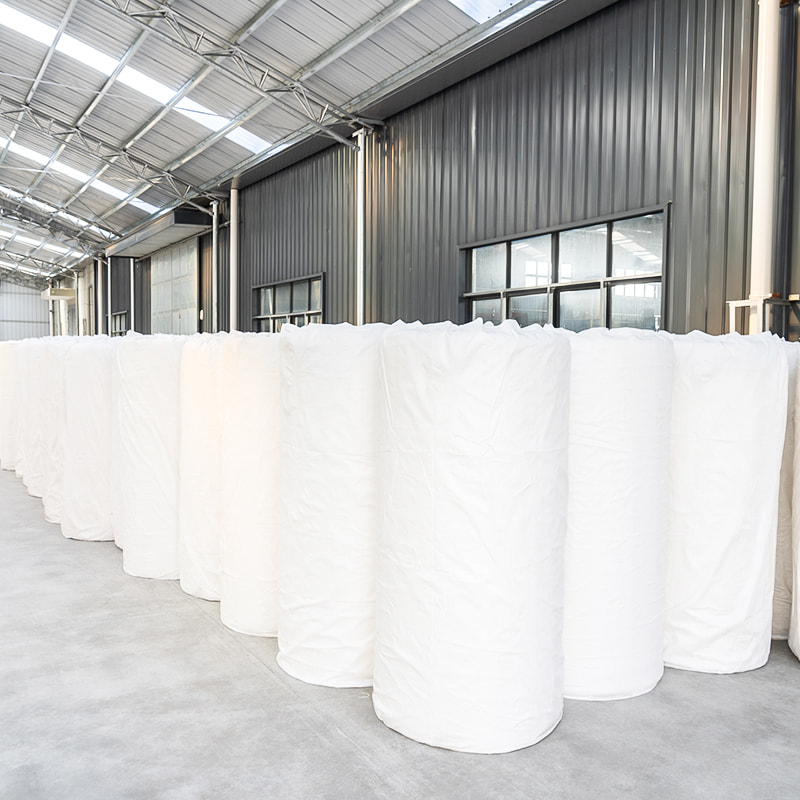
Green poly fiber does not usually arrive at a factory as loose filaments. In most microfiber supply chains the fiber is converted into a nonwoven sheet before splitting, because a stable, uniform web gives you even water penetration and consistent splitting across the full width of the material.
Basis weight control, fiber orientation, and web density all influence how the water jets behave. A web with thin patches will split unevenly, and the resulting material will show visible streaks after dyeing. Consistent carding and needling is therefore not a cosmetic detail; it is the foundation of a predictable microfiber.
Mechanical bonding entangles the bicomponent filaments into a three-dimensional web that holds together through the water-powered splitting stage and can be handled as a roll.
Because the web is already in sheet form, the PVA sea can be removed in a continuous process, which keeps the line efficient and the fiber losses low.
For converters who prefer to buy the web rather than build it, water-soluble polyester sea-island fiber nonwoven fabric is the intermediate product that sits between raw fiber and finished base material.
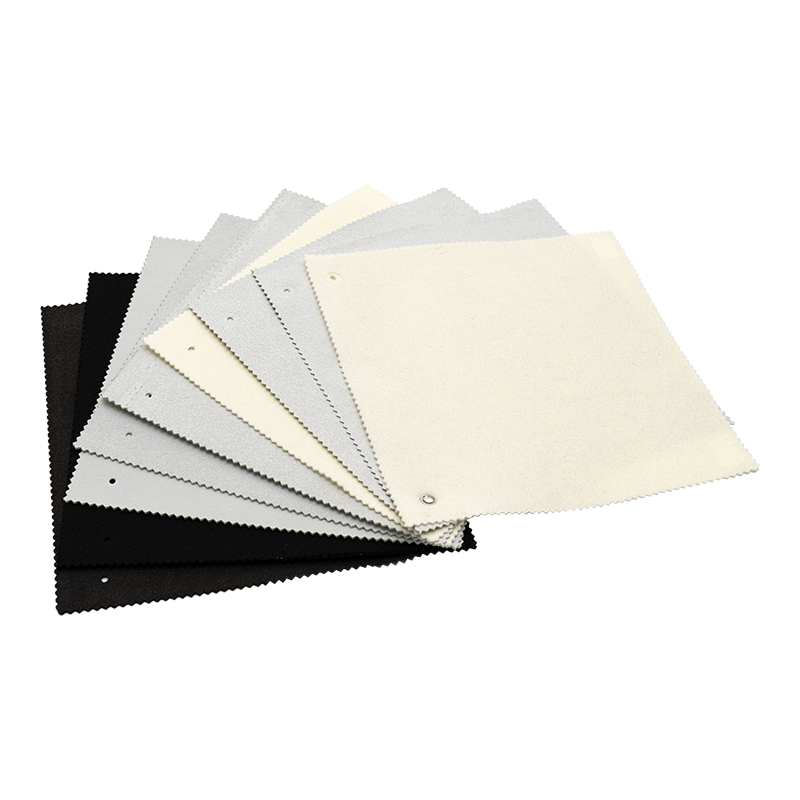
 Water-Soluble Sea-Island Fiber Nonwoven FabricA pre-formed 280–800 g/m² web for converters who want to focus on downstream finishing rather than build carding and needling themselves.View Product →
Working with a pre-formed web also shortens the learning curve. Instead of tuning carding, needling, and splitting at the same time, a converter can focus on the downstream finishing steps where their own expertise actually adds value.
The last link in the chain is the base material, a sheet of water-based microfiber fabric that is ready for a converter's own finishing line.
A bonded sheet of ultrafine polyester filaments, produced without solvent-based opening, supplied as a roll for further processing.
Typically into impregnation, coating, or lamination, where the microfiber structure is combined with a resin system to create a leather-like material with a dense, soft surface.
Even splitting across the width, consistent filament fineness, stable tensile behaviour, and a clean, low-residue surface that accepts resin evenly.
Because no solvent or alkali residue is left in the structure, the base behaves predictably during coating and avoids the ionic contamination that can disturb some resin systems.
Finer filaments mean a larger surface area and more internal friction, which is what produces the soft, peach-skin touch associated with good microfiber leather.
Water-based microfiber base materials can be finished in several ways, so converters are not locked into a single resin chemistry or a single end use.
For teams that want to start at the finished sheet rather than the raw filament, water-based microfiber fabric is the practical entry point into this material family.
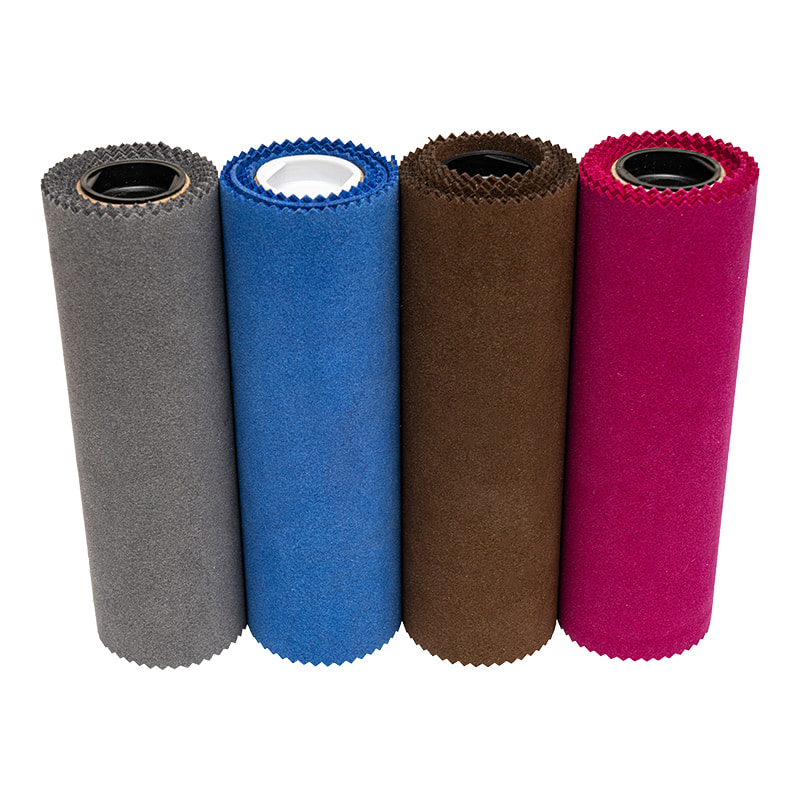 Water-Force Microfiber Fabric for Footwear and UpholsteryA finished sheet made from water-reduced sea-island nonwoven and water-force polyurethane, positioned for footwear, upholstery, automotive interiors, and other performance uses.View Product →
Green claims in the fiber industry range from fully documented to pure marketing. These six questions separate the two quickly.
The pattern is consistent. Suppliers who understand their own process give you mechanisms, units, and baselines. Suppliers who are repeating a marketing deck give you adjectives. Both may be telling the truth, but only one of them can help you defend the claim in front of your own customer.
Not necessarily. In craft and display markets, yes, the phrase usually just describes dyed staple fiber. In industrial material specifications, it refers to polyester produced or processed with a reduced environmental burden, which is a completely different claim that depends on feedstock, energy, and the fiber opening method.
No. Recycled polyester addresses the raw material stage only. A fiber can be made from 100% recycled feedstock and still be opened with toluene or hot caustic soda, which leaves the downstream environmental picture largely unchanged. Conversely, a fiber made from virgin polymer can be genuinely low-impact if the spinning and opening stages are clean.
Ordinary microfiber is usually a single polymer extruded as a fine filament or split mechanically into segments. Sea-island fiber uses two polymers in a bicomponent structure, with hundreds of islands embedded in a removable sea. Removing the sea releases filaments that are far finer than anything a conventional spinneret could produce directly, which is why sea-island routes dominate high-end microfiber production.
Yes. Once the PVA sea has been removed and the microfiber is formed, the remaining polyester behaves like polyester. It dyes with disperse dyes, accepts finishing agents, and can be coated or laminated. The main difference is that the fiber structure is finer and more open, so dyeing kinetics are faster and process recipes usually need adjusting rather than rewriting.
The equipment cost is different rather than automatically higher. Water-powered lines replace solvent recovery with water circulation and PVA recovery systems, and they consume less raw material because the sea polymer is reclaimed instead of destroyed. Unit economics depend heavily on local waste treatment costs, water prices, and how strictly solvents are regulated in your region.
Ask for the mechanism, not just the number. Request the measured COD of the opening line wastewater, the PVA recovery rate as an operating average, and permission to see the recovery unit during a plant visit. A supplier with a real process will welcome the questions, because the process itself is the proof.
Green poly fiber is one of those terms that rewards a little patience. Once you separate the color from the chemistry, the real question becomes narrow and answerable: how was the sea component removed, and where did it go? Answer that, and the rest of the specification tends to fall into place.
We build water-soluble sea-island fibers, nonwoven intermediates, and water-based microfiber base materials on exactly that principle, and we are happy to talk through the process data behind the numbers in this article. If you are specifying microfiber for a new product line or replacing a solvent-based step in an existing one, get in touch with our technical team and we will walk through the fiber structure, the splitting conditions, and the finishing route that fits your line.
If your product carries a recycled-content claim, someone downstream will eventually ask you to prove it. The Global Recycled Standard is one of the most widely recognised answers to that question. The Global Recycled Standard, usually shortened to GRS, is a voluntary international certification fo...
READ MORE
Introduction to Water-Soluble Sea-Island Fiber What is Water-Soluble Sea-Island Fiber? Water-soluble sea-islan...
What is Water-Soluble Island-in-the-Sea Fiber? Water-Soluble Sea-Island Fiber is a breakthrough material in th...
Introduction of Water-Force Microfiber Fabric What is Microfiber Fabric? Microfiber fabric is a type of textil...
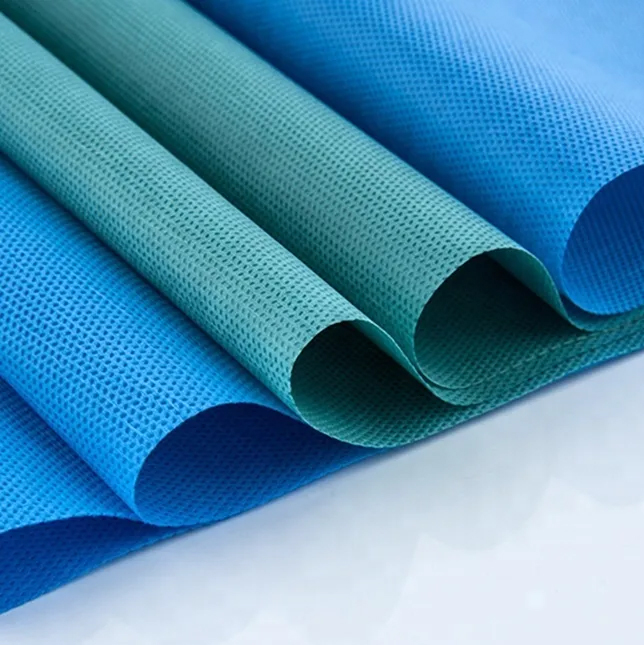
Introduction Water-soluble sea-island fiber nonwoven fabric is a groundbreaking innovation in the textile indu...
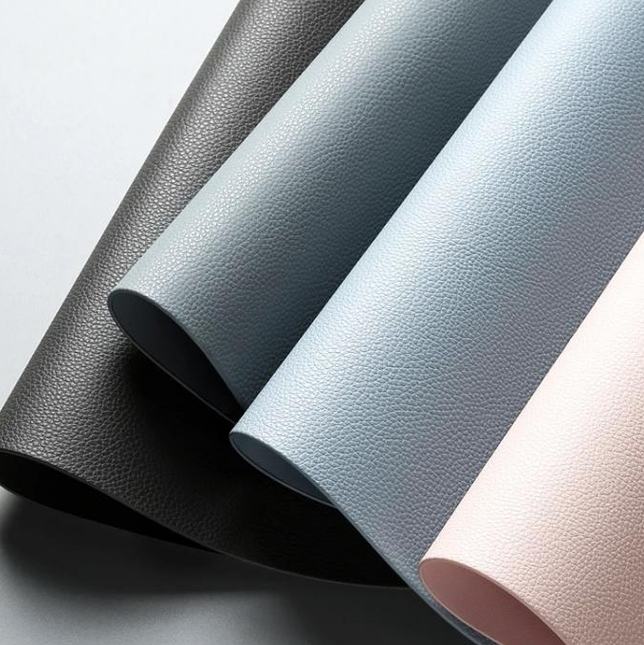
What is Water-Soluble Sea-Island Fiber? Definition and Basic Structure Water-soluble sea-island fiber is a spe...
LEMONTA Technology (ShangHai) Co., Ltd. All Rights Reserved. ALL RESERVED.
 Custom Bio-Based Water-Soluble Polyester Fiber Manufacturers