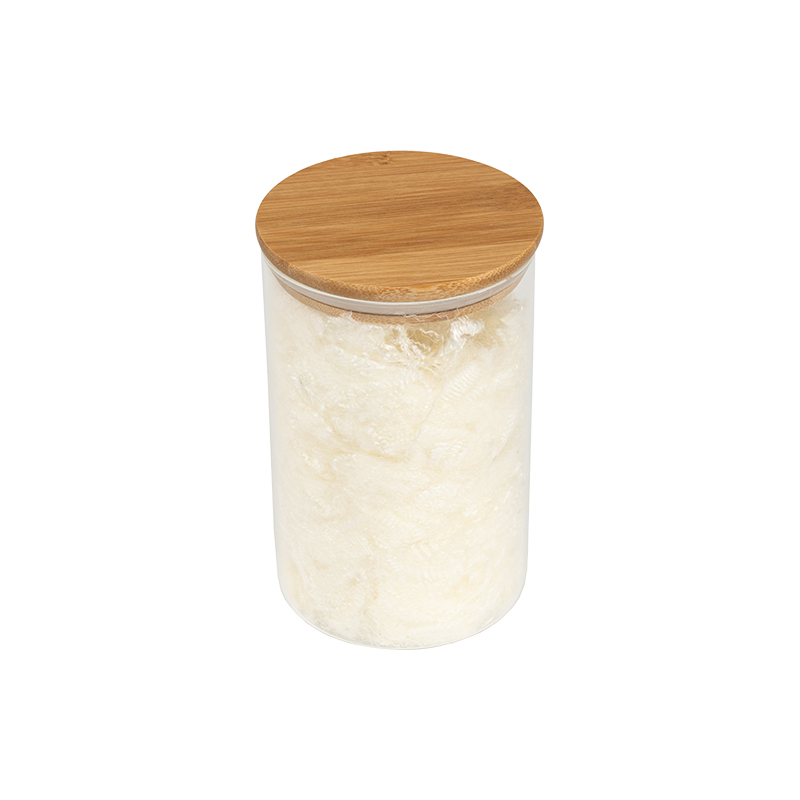
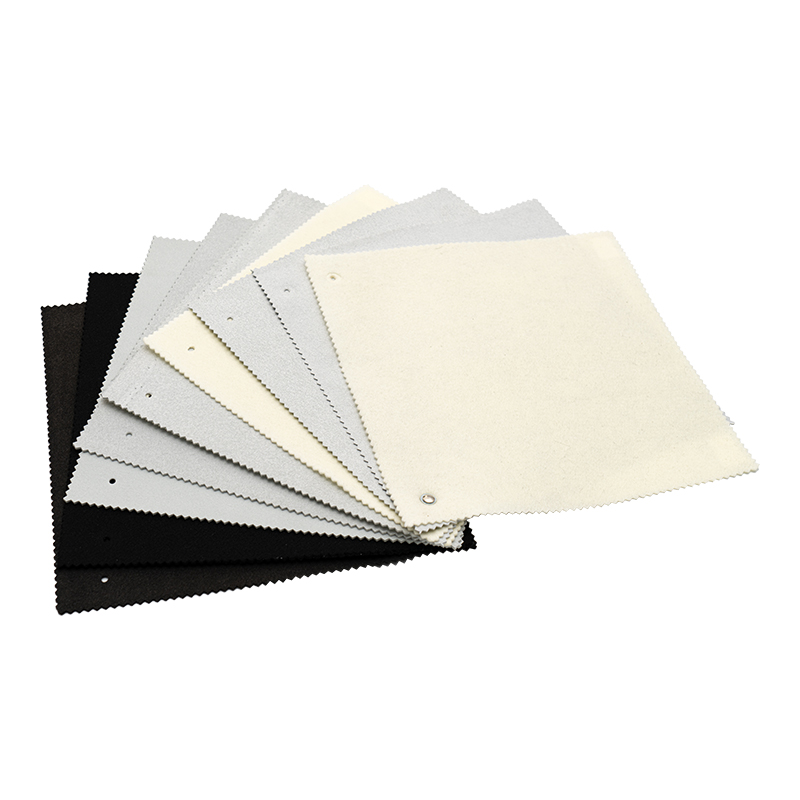
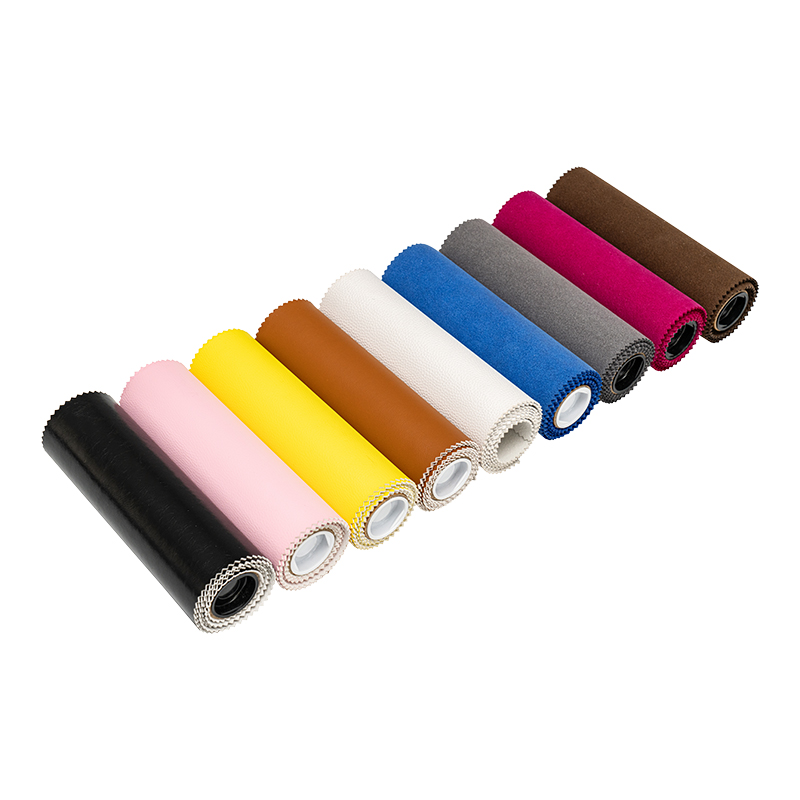
Water-soluble sea island fiber nonwoven fabric is not made from a single material or a simple process — it is the product of a precisely engineered manufacturing chain that begins with the extrusion of bicomponent "sea-island" fibers and ends with a coherent web structure designed to dissolve cleanly in water at a controlled temperature. The sea component — typically polyvinyl alcohol (PVA) or a modified copolyester — must be water-soluble, while the island component provides the ultrafine fiber structure that remains after dissolution. Every stage from spinning to web bonding must be calibrated to preserve the integrity of the water-soluble sea phase without premature dissolution, while still forming a stable, handleable fabric. This guide covers each manufacturing stage with the specific parameters, equipment choices, and technical constraints that determine final fabric quality.
The manufacturing process begins not on the production floor but in the fiber design phase, where the ratio, geometry, and material combination of the sea and island components are established. These upstream decisions determine everything about the final fabric's dissolution behavior, fiber fineness, and mechanical properties.
The sea (matrix) phase must dissolve completely and cleanly in water without leaving residue that could contaminate downstream processes or end products. The two dominant sea materials are:
The island (dispersed) phase forms the ultrafine fibers that remain after the sea dissolves. Common island materials include:
The spinneret design determines how many island filaments are embedded in each fiber cross-section. Standard configurations range from 16 to 64 islands per filament, with high-specification designs reaching 256 islands. A higher island count produces finer individual microfibers after dissolution. The sea-to-island weight ratio is typically set at 30:70 to 50:50 — enough sea phase to form a continuous matrix that holds islands in position during spinning and web formation, but not so much that dissolution time becomes excessive or material cost prohibitive.
With the fiber architecture defined, the sea and island polymers are simultaneously extruded through a specially engineered bicomponent spinneret to form continuous filaments with the sea-island cross-sectional structure.
The spinneret is the most technically demanding component in the entire manufacturing line. It consists of a distribution plate system that routes the two polymer melts — sea and island — into precise geometric arrangements before they converge at the capillary exit. The sea polymer flows through the outer distribution channels and completely surrounds the island polymer streams, which travel through fine internal channels corresponding to the desired island count. Any contamination, pressure imbalance, or temperature variation at the spinneret produces irregular cross-sections, broken islands, or sea-island mixing — all of which compromise dissolution uniformity and microfiber quality.
| Parameter | PVA Sea / PET Island | WSPET Sea / Nylon Island | Why It Matters |
|---|---|---|---|
| Melt temperature (sea) | 190–220°C | 250–270°C | Controls sea viscosity and flow balance |
| Melt temperature (island) | 270–290°C | 260–280°C | Must not degrade sea phase at contact zone |
| Spinneret capillary diameter | 0.25–0.40 mm | 0.20–0.35 mm | Determines as-spun filament diameter |
| Wind-up speed | 800–1,500 m/min | 1,000–2,000 m/min | Controls draw ratio and molecular orientation |
| Total filament fineness | 2.0–4.5 dtex | 1.5–3.5 dtex | Determines web uniformity and drape |
As filaments exit the spinneret, they pass through a quench air zone where cross-flow or radial air at 15–25°C rapidly solidifies the outer sea phase before the island-sea interface can intermix. Insufficient quench air produces filaments with diffuse island boundaries — a defect that causes incomplete fiber separation during downstream splitting or uneven dissolution. The filaments are then drawn (stretched) to 3–5× their as-spun length to develop tensile strength and molecular orientation in both sea and island components.
For nonwoven web formation via carding or airlaid processes, the continuous bicomponent filaments must be converted into staple fibers. This stage introduces mechanical crimp and cuts the tow into defined fiber lengths suitable for opening and carding.
The drawn tow passes through a stuffer-box crimper, where it is compressed against a retaining gate to create a zigzag crimp geometry. Crimp frequency is set at 8–14 crimps per centimeter for sea-island fibers destined for carded nonwovens — sufficient to promote fiber cohesion and web integrity during carding without causing excessive tangling that would break the sea matrix. This step requires careful pressure calibration: too much crimp force can crack the PVA sea phase, exposing island surfaces and creating premature water sensitivity during processing.
The crimped tow is cut to staple lengths matched to the web formation method:
Cut staple bales are opened by a sequence of coarse and fine opening machines — hopper feeders, coarse openers, and fine openers with pin or spike rollers. Opening intensity must be lower than for conventional synthetic fibers because aggressive mechanical action can fracture the brittle PVA sea phase in the bicomponent fiber cross-section, creating loose fiber fragments that reduce web uniformity and accelerate moisture pickup in humid processing environments.
Web formation is the stage where opened staple fibers are assembled into a coherent two-dimensional fiber network — the precursor to the finished nonwoven fabric. Three web formation methods are used for water-soluble sea-island fiber nonwovens, each producing different structural characteristics.
Carding is the dominant web formation method for water-soluble sea-island nonwovens used as sacrificial substrates and technical textile backings. The opened fiber mass is fed into a card — a machine with a large main cylinder and multiple worker/stripper roller pairs, all clothed with fine wire teeth that individualize fibers and align them preferentially in the machine direction (MD).
Key carding parameters for sea-island bicomponent fibers:
A single card produces a web with strongly anisotropic fiber orientation — MD tensile strength may be 3–6× higher than CD strength. For applications requiring more balanced properties, the card web is fed into a cross-lapper that lays successive layers at alternating angles across the conveyor width. Cross-lapped webs for sea-island nonwovens typically use 4–8 layers at lay angles of 25–35° to achieve MD:CD tensile ratios of 1.5:1 to 2.5:1.
For applications requiring continuous filament nonwovens rather than staple fiber webs, a spunbond line can produce sea-island webs directly from the bicomponent melt spinning process. Filaments are extruded, quenched, drawn by air aspirators, and deposited onto a moving forming belt in a random lay pattern. Spunbond sea-island nonwovens achieve more uniform basis weights (CV below 5%) and higher tensile strength per unit weight than carded equivalents, but require higher capital investment and are less flexible in basis weight range.
The loosely formed fiber web has no structural integrity until it is bonded. Bonding method selection is the most critical processing decision in water-soluble sea-island nonwoven manufacture — any bonding method that introduces water or temperatures above the sea polymer's dissolution threshold will destroy the fabric before it reaches the customer.
Thermal bonding through a calendar press or through-air oven is the most compatible bonding method for PVA-sea nonwovens. The process uses heat — not moisture — to soften and fuse fiber contact points.
Needlepunching uses barbed needles that penetrate the web at high frequency, mechanically entangling fibers in the Z-direction without any thermal or chemical input. Punch density for sea-island bicomponent webs is set at 50–150 punches/cm² — lower than conventional needlepunched nonwovens to avoid breaking the sea matrix. Needlepunching is preferred when the final fabric needs high thickness, drapability, and tear resistance — properties that calendered thermal bonds cannot provide at equivalent basis weights.
Hydroentanglement (spunlace) uses high-pressure water jets to entangle fibers — a process fundamentally incompatible with PVA sea phases, which begin dissolving on water contact. Hydroentanglement is only viable for sea-island nonwovens when the sea component is a modified copolyester soluble only in hot alkaline solution (above 60°C with NaOH), not in the ambient-temperature water used in the hydroentanglement process itself. In these systems, cold process water entangles the bicomponent fibers before any dissolution occurs.
After bonding, the consolidated web undergoes finishing operations that prepare it for shipment and end use. These steps require the same moisture and temperature discipline maintained throughout the earlier stages.
PVA-containing nonwovens generate significant static charge during winding and slitting, attracting dust and causing handling problems. Antistatic finishes are applied by kiss-roll or spray at 0.1–0.3% add-on weight using non-aqueous antistatic agents or extremely dilute aqueous systems applied at controlled temperature (below 20°C) with immediate drying to prevent localized PVA dissolution at the fabric surface.
The full-width master roll (typically 1,600–3,200 mm wide depending on the card or spunbond line width) is slit to customer-specified widths using rotary knife slitters. Slit edges of PVA-based nonwovens are more susceptible to moisture absorption than the bonded fabric face, so edge sealing with wax or polyethylene coating is applied on rolls destined for high-humidity storage or transport environments.
Finished rolls are wrapped in moisture-barrier polyethylene film and heat-sealed before palletizing. Storage conditions must be maintained below 25°C and 60% RH throughout the supply chain. Exposure to condensation, rain, or high-humidity environments — even briefly — can cause surface tack, dimensional change, and partial dissolution that renders rolls unusable. This packaging requirement is a significant logistical consideration that distinguishes water-soluble sea-island nonwoven fabric from conventional synthetic nonwovens in distribution and warehousing.
| Stage | Key Process | Critical Control Parameter | Failure Mode if Uncontrolled |
|---|---|---|---|
| Fiber design | Sea-island ratio and island count selection | Sea % and island geometry | Incomplete dissolution or poor microfiber yield |
| Melt spinning | Bicomponent extrusion and quenching | Spinneret temperature balance | Diffuse island boundaries, irregular cross-section |
| Staple conversion | Crimping and cutting | Crimp box pressure | Sea phase cracking, premature moisture sensitivity |
| Web formation | Carding and cross-lapping | RH below 60%, temperature below 25°C | Fiber sticking, web weight non-uniformity |
| Bonding | Thermal calendar or needlepunch | No water contact; temperature below dissolution point | Partial dissolution, fabric strength loss |
| Finishing | Slitting and moisture-barrier packaging | Sealed packaging, controlled storage | Roll blocking, surface dissolution in transit |
The defining manufacturing challenge throughout every stage is maintaining the integrity of the water-soluble sea phase until the moment of intentional dissolution in the end-use process. Every equipment setting, environmental control, and material handling decision from spinneret to shipping pallet is ultimately in service of that single requirement.
Sea Island fiber (extra-long staple cotton, Gossypium barbadense) dissolves readily in specific solvent systems, and its dissolution behavior is critically sensitive to both temperature and pH. In alkaline aqueous systems (pH 12–14) combined with elevated temperatures (60–90°C), dissolution efficie...
READ MORE
Introduction to Water-Soluble Sea-Island Fiber What is Water-Soluble Sea-Island Fiber? Water-soluble sea-islan...
What is Water-Soluble Island-in-the-Sea Fiber? Water-Soluble Sea-Island Fiber is a breakthrough material in th...
Introduction of Water-Force Microfiber Fabric What is Microfiber Fabric? Microfiber fabric is a type of textil...
Introduction Water-soluble sea-island fiber nonwoven fabric is a groundbreaking innovation in the textile indu...
What is Water-Soluble Sea-Island Fiber? Definition and Basic Structure Water-soluble sea-island fiber is a spe...
LEMONTA Technology (ShangHai) Co., Ltd. All Rights Reserved. ALL RESERVED.
 Custom Bio-Based Water-Soluble Polyester Fiber Manufacturers
 英语
英语 中文简体
中文简体